



Today we invite you to discover the history of the building that houses our hotel: the Manor House of the Marquises of La Quinta Roja.
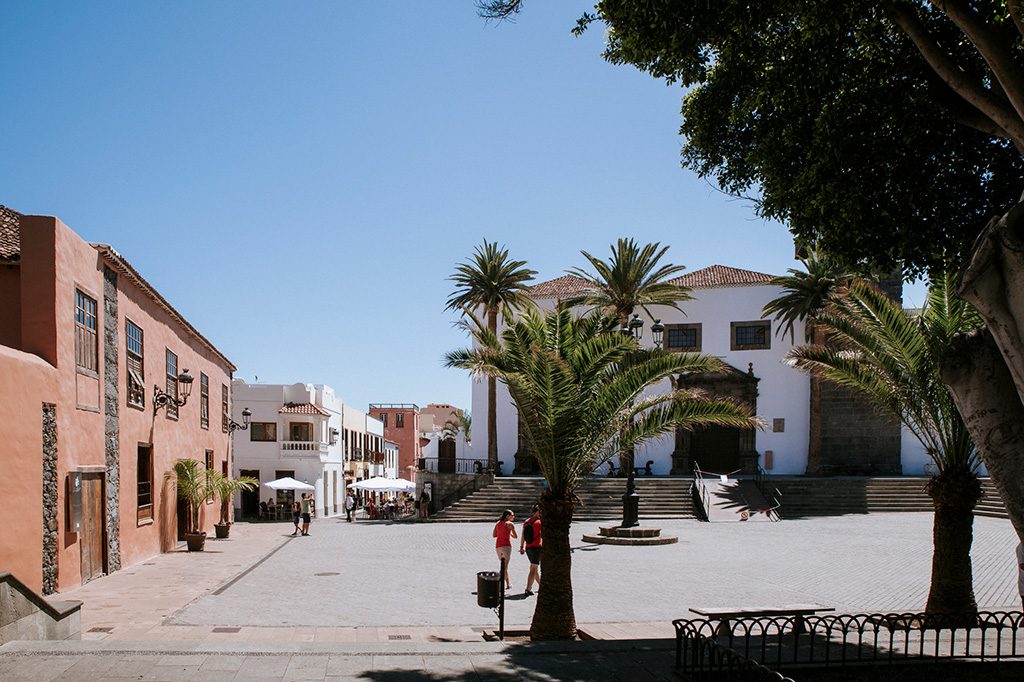
The house is located in the heart of the monumental complex of the villa and port of Garachico, right next to the former Convent of San Francisco, the house of the Counts of La Gomera (the current Stone House), the Town Hall, and the Church of Santa Ana, constituting one of the main historical benchmarks of the entire urban environment.
Our walls have been privileged witnesses to more than four centuries of history of the Villa and Port of Garachico, which came to be Tenerife’s gateway to the world in the 15th and 16th centuries.
We invite you to join us on a journey through time to discover our history.
Noblesse oblige
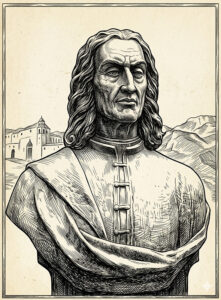
The history of our house begins with the very origin of the Villa. Garachico was founded in 1496 by the Genoese banker Cristóbal de Ponte, who received these lands as a reward for his financial support in the conquest of the island. The Ponte family did not just found the port; they established a lineage of great landowners who ruled the area for centuries and still maintain weight in the local economy.
Our manor house was built by another elite landowning family, the Monteverdes, who erected it in the 16th century before it passed to the descendants of the Pontes.
It was rebuilt in the 17th century by Cristóbal de Ponte y Llarena, the first Marquis of La Quinta Roja, who consolidated this building—one of the most outstanding examples of traditional Canarian Baroque domestic architecture in Garachico. The mansion was not affected by the terrible eruption of the Trevejo volcano in 1706, but it later suffered a significant fire and had to be rebuilt once again.
This was the habitual residence of the first Marquis of La Quinta’s family, who also owned other properties, such as the banana plantation of La Quinta Roja, with a beautiful rural mansion that rivaled this one in beauty and currently belongs to the Cabildo of Tenerife.
These families were part of the select 1.7% of owners who controlled most of the land and water in the municipality, a power reflected in the sumptuousness of their residences.
The "First Squatters" of Garachico
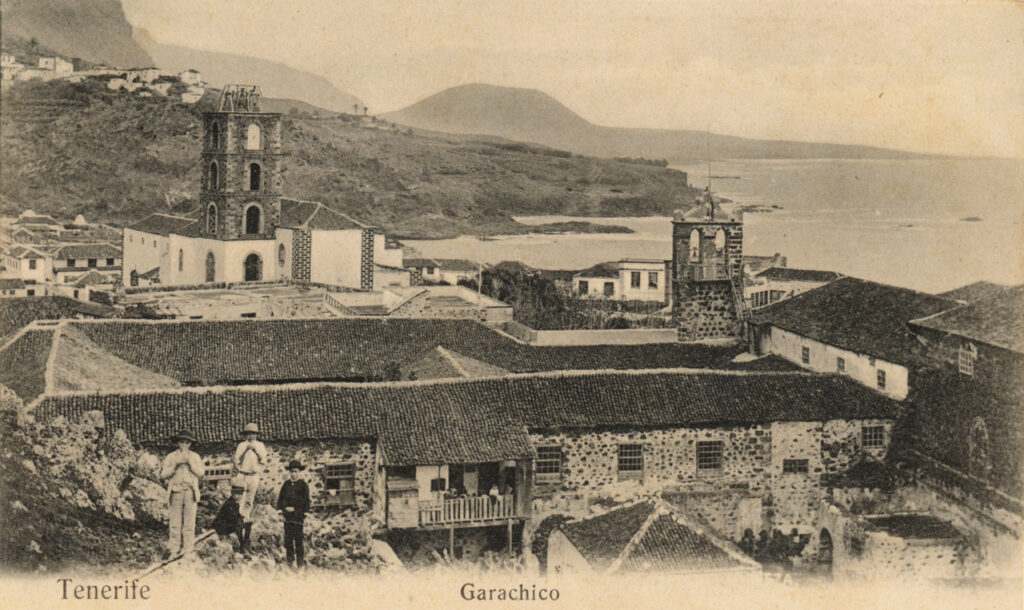
One of the most curious anecdotes in our history occurred after the fateful volcanic eruption of 1706. Although the lava respected the basic structure of the mansion, fate had other plans. In 1709, a terrifying fire destroyed the neighboring San Francisco Convent.
At that time, due to the destruction of Garachico’s natural harbor by the volcanic eruption, maritime traffic and commerce shifted to the ports of Santa Cruz and La Orotava (now Puerto de la Cruz). Merchants and nobles, including the family of the Marquis of La Quinta Roja, moved their residences, leaving this house in disuse as the villa lost its economic weight.
Faced with the emergency, the community of Franciscan Conceptionist nuns was forced to find a new home, and the Marquis granted them the use of this house. This is how the nuns became the “first squatters” (in the most affectionate sense of the term) of this manor house. What was meant to be a temporary stay lasted 40 years (until 1749), transforming the noble halls into spaces for prayer and seclusion while their convent was being rebuilt.
Sister Martina, the Good Nun
From the nuns’ time in our house, one anecdote has survived the passing centuries: that of Sister Martina.
Martina was born in the village of Chipude, La Gomera, in 1650, into a humble family. When she was a child, Moorish pirates captured her mother, and her father sent her to Garachico to the care of a first cousin, Sister María de San Pedro y Mejía, to look after her education.
In 1687, she took her vows. Martina was a special woman as she had the ability to foresee future events and stood out for her kindness and love for others, which eventually sparked envy among her companions.
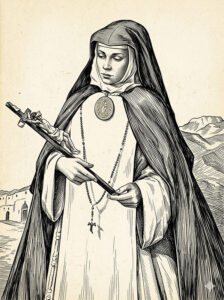
Sister Martina passed away at the age of 93 in the House of Quinta Roja, which the Marquis had granted her due to his friendship with her. Upon her death, she was buried there, but when the nuns moved back to their convent, they took her remains to be buried there.
At the foot of the Convent Church lies the lattice that separates the cloistered nuns from the rest of the faithful. If you look up at the high choir, you can still see the convent’s relic: the jawless skull of Sister Martina.
Legend has it that Sister Martina still appears from time to time around the hotel. If you encounter her, do not fear; she is a benevolent spirit who continues to watch over the living, just as she did throughout her life.
From Manor House and Convent to Emblematic Hotel
After the nuns’ stay, the house passed into the hands of other illustrious families until, in the early 90s, the Garachico Town Hall purchased it from its last owners, the Cabrera Revilla family, as part of a heritage rescue program for buildings in a clear state of deterioration.
This purchase was part of a strategy to shift Garachico’s economy toward the service sector to overcome the local agricultural crisis.
Once in the hands of the Town Hall, it received several purchase offers from a German investor and a businessman from Gran Canaria.
In 1997, hotelier José Moriana Santisteban, born in Garachico, along with his partners—four architects from the island—acquired the manor house to undertake a long and careful rehabilitation that restored its lost splendor, transforming it into the cozy hotel you can enjoy today.
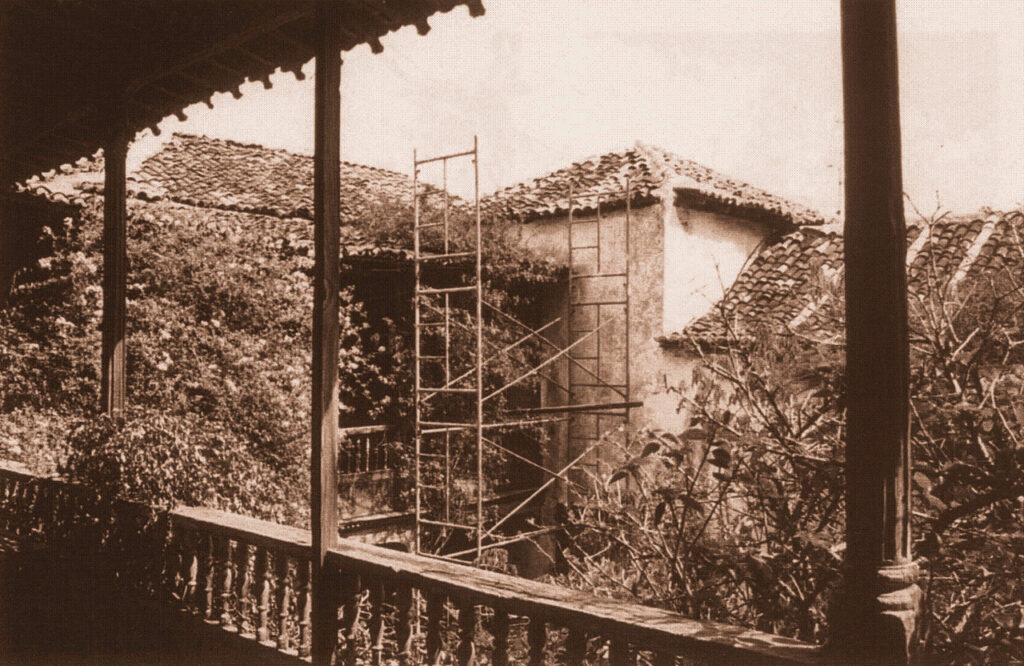
The Renovation
The rehabilitation of this building, listed as a Site of Cultural Interest, for its adaptation to its new hotel use, was an arduous task that spanned 4 years between projects, permits, and execution.
A delicate balance had to be maintained between historical preservation and tourist functionality—adapting a 16th-century building to the needs of 20th-century travelers.
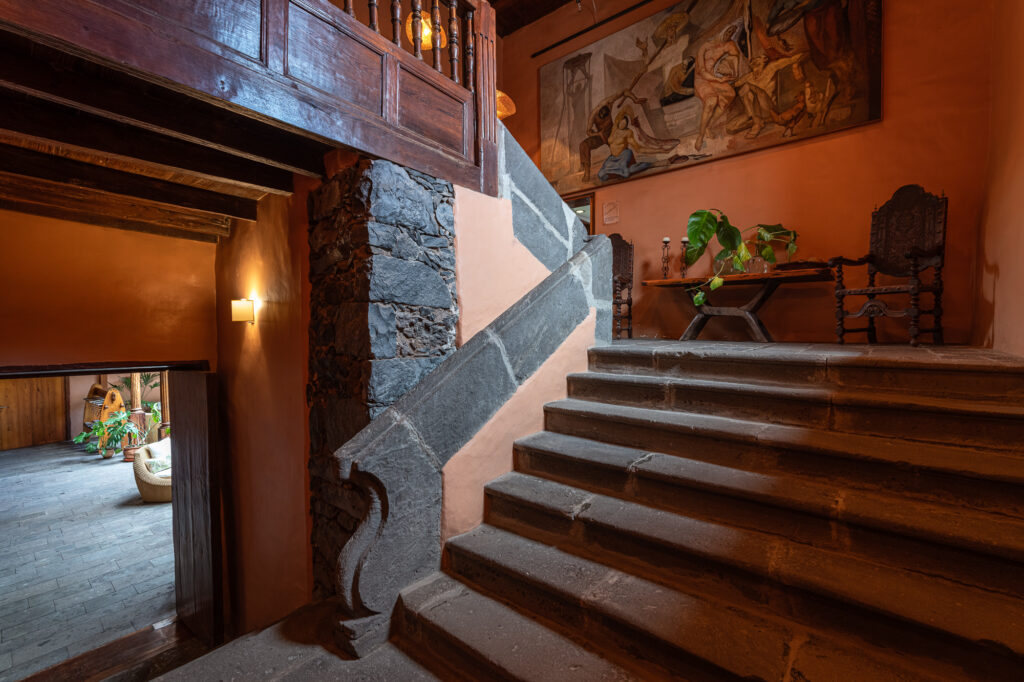
We can proudly state that we succeeded, as we preserved 80% of the original tea wood (Canarian pine) in the patio and ceilings, the early 17th-century stone staircase remained intact, as did the windows of the original facade, the coffered ceilings in some rooms, and unique elements like the aljimez (mullioned window) or the galleries.
Committed to Heritage Conservation
Thanks to its conversion into the Hotel La Quinta Roja, the conservation of this valuable property, one of the historical benchmarks of Garachico’s old town, has been guaranteed. Each year, we reinvest part of our profits into the maintenance and conservation of our Manor House so that its history and soul remain alive.
La Quinta Roja, a Hotel with Soul
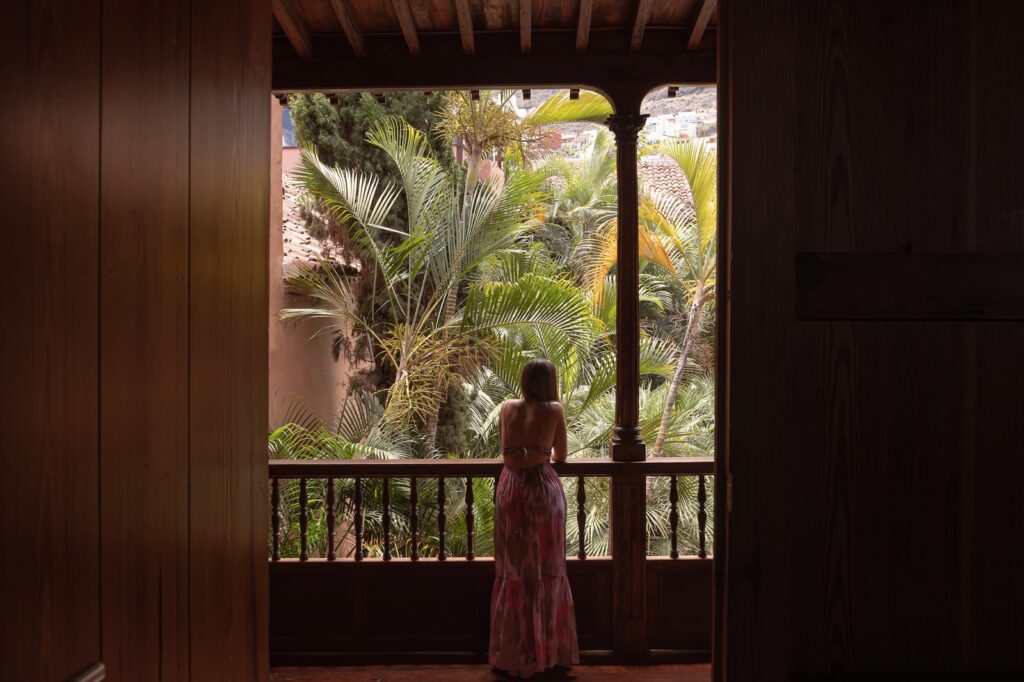
The next time you enter our hotel, stop for a second to observe and imagine what life was like within these walls centuries ago, when the Marquis watched the arrival of ships from the aljimez or the cloistered nuns prayed in the courtyard.
We like to think that part of what was lived within these walls remains, and it moves us when guests describe the peace they feel in our patio. The history of our house and what has been lived in it is part of the soul of La Quinta Roja.