



Knowing a place is not just passing through it — it means talking with the people who live there, learning about their culture and traditions, tasting their flavours and discovering their craftsmanship.
When we buy a handmade object, we take home much more than a beautiful souvenir. We take a little piece of the soul of the person who created it and of the place where it was made.
Handmade products tell us a great deal. They speak of ancestral techniques passed down from generation to generation, of the natural materials available in the area, of the creativity and innovation of its people, and of the cultural influences that this territory — the Canary Islands, a place of constant comings and goings — has received and continues to receive.
In November 2001, when we opened the doors of La Quinta Roja, we knew exactly what we wanted. We wanted to create a shop that would showcase the work of the islands’ artisans so that our guests and visitors could take home a gift with a Canarian soul. And that is how La Venta de lo de Aquí was born.
Craftsmanship runs in our veins
And it truly does run in our blood. Lola Martín Fernández, great-great-grandmother of Paloma Moriana, director of La Quinta Roja, was a pioneer in the promotion and commercialisation of craftsmanship on the islands.
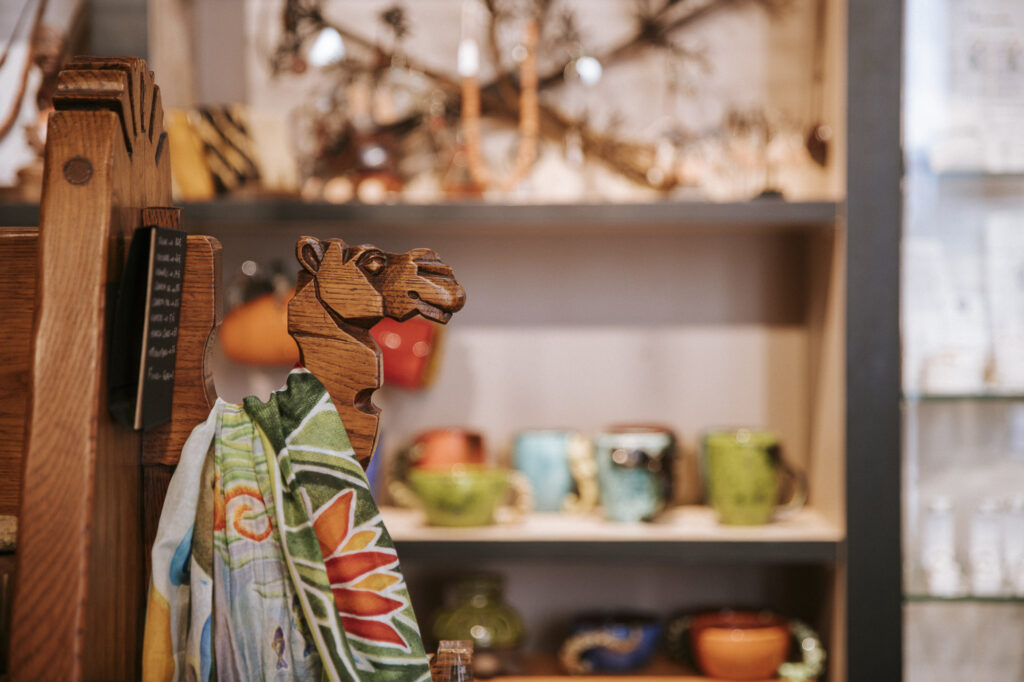
In 1932 she opened her first shop in the Parque de Santa Catalina in Gran Canaria, “Fataga”. From that era we preserve a treasure in our shop: a hand-carved shelf featuring the head of a camel, designed by her brother, Néstor Martín-Fernández de La Torre, one of the most important Modernist painters and artists of the Canary Islands.
At the age of twelve, Pepi Nadal Perdomo, Paloma’s mother, began helping her grandmother in the new craft shop they opened in the Pueblo Canario in Las Palmas de Gran Canaria. Over the years, she took over from her grandmother at the helm of the shop and continued working there until her retirement in 2014, which coincided with the temporary closure of the Pueblo Canario for renovation.
During those fifty years, Pepi travelled the islands in search of craft pieces. Treasures such as the drawn-thread tablecloths she purchased from craftswomen in La Guancha and Los Realejos, or the Guanche nativity scene that adorns our entrance every Christmas. She was a privileged witness to the work of a last generation of traditional craftspeople, some of whose trades have already disappeared due to a lack of successors.
Pepi channelled all her experience into the book “La voz de Néstor en el silencio”, a work in which she pays tribute to the identity of Gran Canaria, traditional fashion and her own family.
With this family background, we had to continue the legacy of these two remarkable women. And so we created a shop, La Venta de lo de aquí, to carry on honouring the work of the islands’ traditional artisans, as they did, but also to open ourselves up to contemporary Canarian craft creation.
From traditional pottery to contemporary ceramics
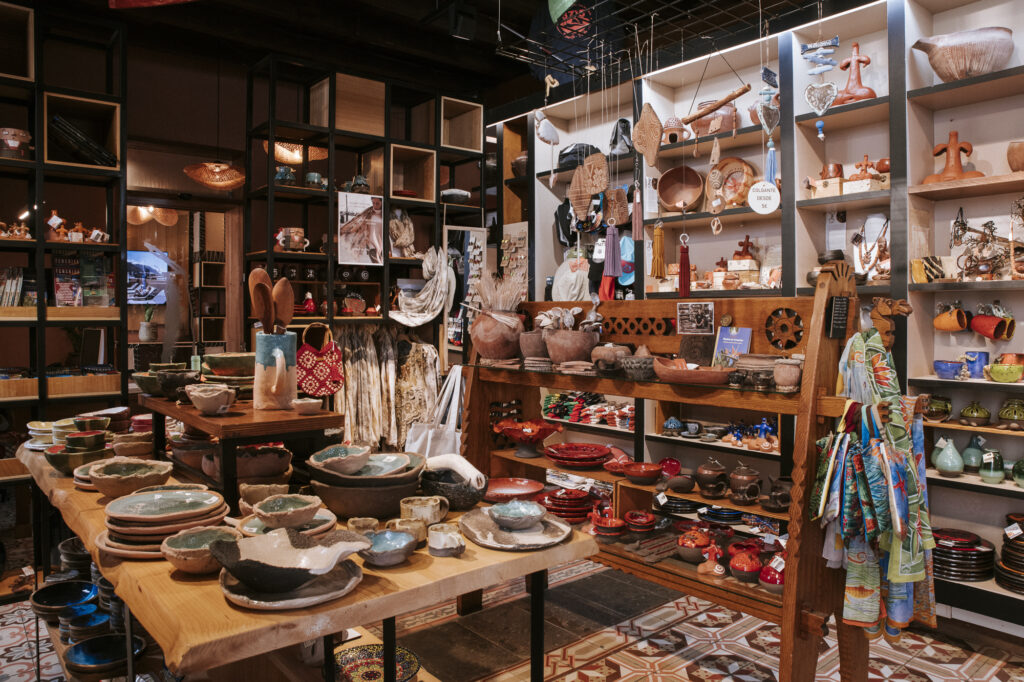
Craft is not static — it evolves. That is why on our shelves you will find gánigos and Tara figures — made in the image of those crafted by the first inhabitants of the islands — alongside traditional earthenware — everyday vessels used after the Conquest, such as quemadores, lebrillos and bernegales — and original plates and cups with colourful designs by contemporary ceramicists who experiment creatively with shapes, textures and colours.
Potters such as Juan Manuel Pérez Galván and Agael bring us pieces that speak of the pre-Hispanic culture of the islands. They are part of a small group of traditional potters who keep alive the legacy of the first inhabitants of the islands.
Juan Manuel Pérez Galván, traditional potter
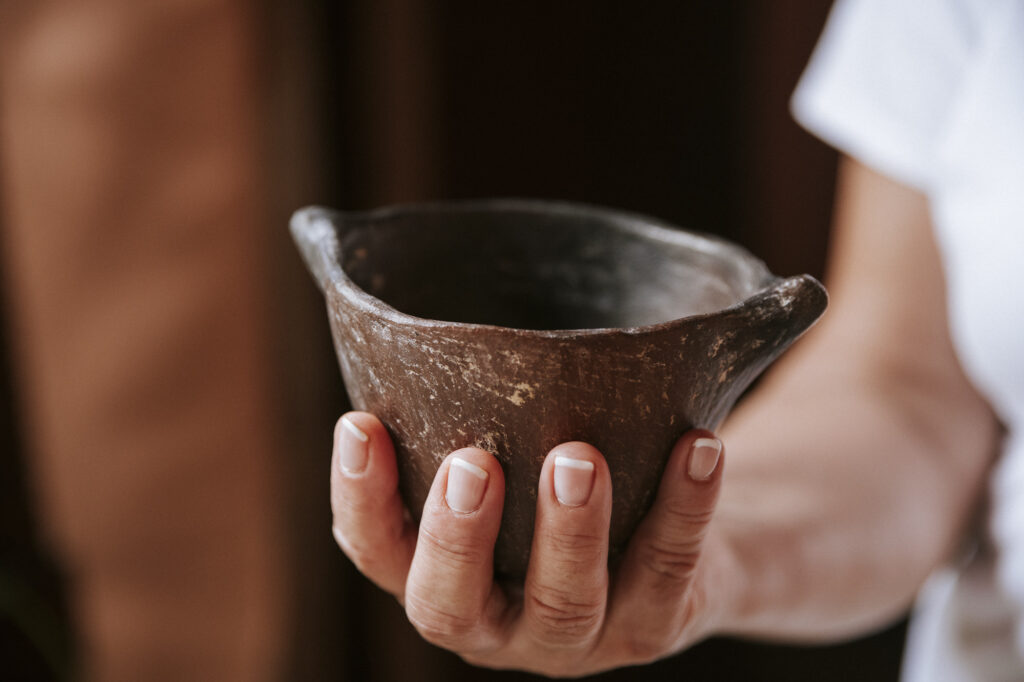
Juan Manuel Pérez Galván has been working clay in the traditional way for fifteen years, just as the Guanches did.
He collects clay in Arafo or Arico and, in his workshop in Güímar, creates reproductions of some of the aboriginal pieces held at the Archaeological Museum of Betancuria (Fuerteventura), such as gánigos and vertederos. He also works with traditional earthenware — everyday objects introduced after the Conquest of the islands, such as tostadores, lebrillos and bernegales. Once fired, he decorates them with “tegue” — a white clay he brings from Fuerteventura — or with almagre, clays in black, red or orange.
He also develops his own creations, such as coasters or fridge magnets, as well as creative pieces using aboriginal techniques and designs.
His hands, stones, spatulas and bone punches are his only tools. With them he shapes his pieces following what he learned from his master potters: Milagros Santana Orribo, Pedro Benítez Reyes and Isabel Padrón.
Juan Manuel is one of the few traditional potters keeping alive in Tenerife one of the rare aboriginal traditions to have survived since before the Conquest. Clay speaks to us of our history.
El Alfar de Agael: tradition and creation
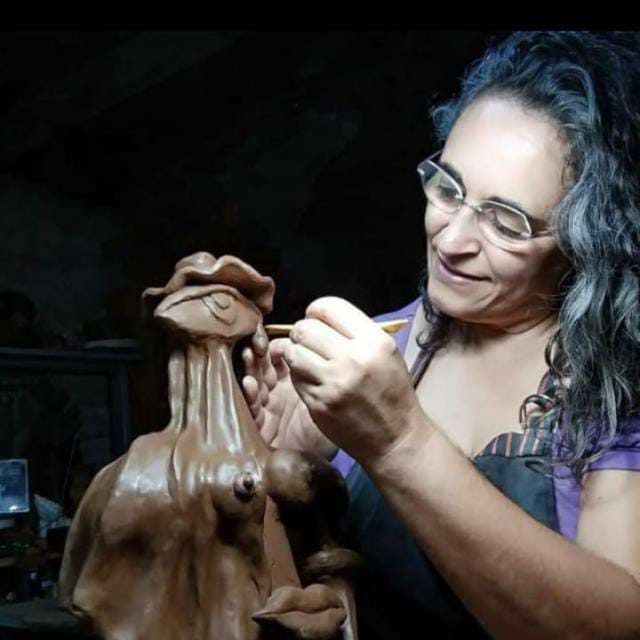
The Agael pottery workshop moves between two worlds: traditional pottery and artistic creation, between rootedness in tradition and creative freedom.
Agael has her workshop in El Escobonal, in Güímar. She defines herself as an innovative traditional potter, using ancestral methods — Neolithic techniques inherited from the Guanches — to create different pieces.
To make her creative pieces, she uses the same coiling and firing techniques she applies to reproductions of aboriginal pieces. She collects clay from the same places used by the ancestors, which she has recovered through oral tradition. From there, she lets her imagination soar to create unique pieces, each accompanied by a certificate of authenticity.
Agael is particularly interested in reproductions of aboriginal pieces from all the islands, including the Tara idols of Gran Canaria and the small “Sola en el parto” figurines, which stimulate acupressure points that activate the birth canal and relieve menstrual pain. Her curiosity has led her to research idols from different cultures, finding similarities with other pieces sharing the same function in Africa and South America.
Agael is very pleased that the traditional potters of the Canary Islands have come together as an association to jointly fight for the recognition of their craft as a Cultural Heritage Asset. The first steps have been taken to protect this valuable legacy.
Contemporary Canarian ceramics
New ceramicists experiment with colour and texture to create functional objects we can enjoy every day at home.
Timijota: colour at the table
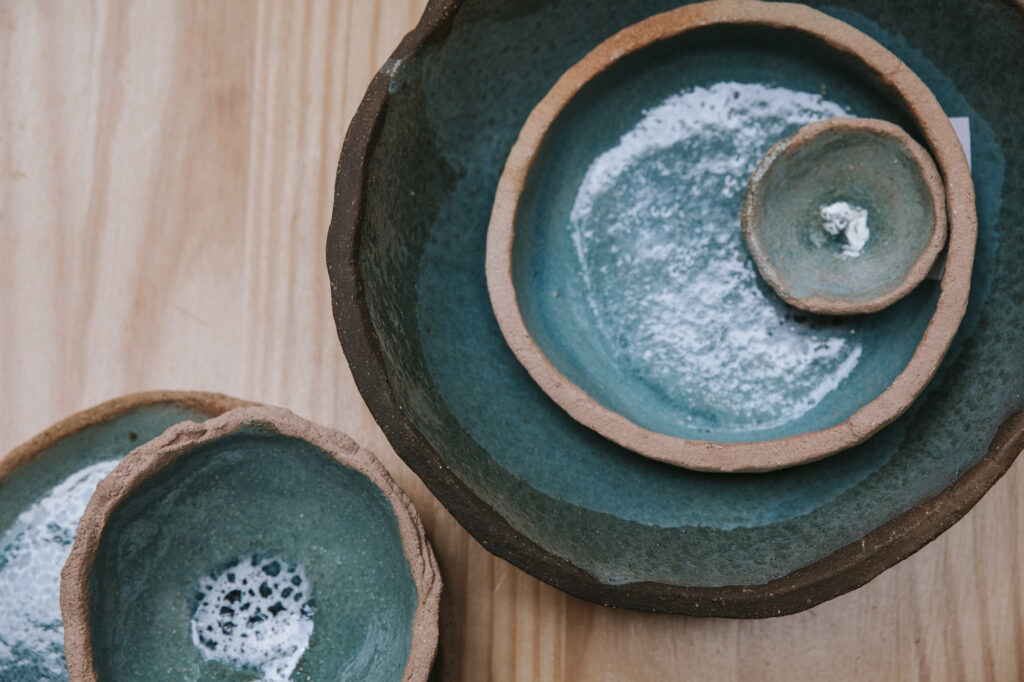
This is the case of Timijota Studio tableware, with organic designs that speak of the surrounding environment: the sea, the lava and the jable of Lanzarote, and the landscapes of Tenerife — the two islands between which Carlos Martínez Arrocha divides his life and work.
The term Timijota refers to the callao (smooth stone) that the Guanches used to burnish their ceramic pieces.
Carlos was born in Madrid, to a mother from La Palma and a father from Priego, a village in Cuenca with a tradition of wicker work and pottery. He trained at the Pancho Lasso School of Art in Lanzarote, where he completed the advanced course in Artistic Ceramics.
Colour has always been present in his life — through his grandmother’s paintings, the graffiti with which he grew up in Madrid, and the watercolours and acrylics with which he began to experiment as a self-taught artist.
His hands are his favourite working tool. He loves being able to feel the clay and leave his mark. With them he achieves those organic forms and the deliberate imperfection that is his hallmark, along with his colours and textures that speak of the Atlantic and volcanoes.
After starting out selling at local markets in Lanzarote, his tableware, tile murals and vessels are now found in shops, as well as in restaurants and hotels throughout the Canary Islands.
Carlos greatly values the experience and wisdom acquired through his years of training and work — the kind he tries to convey through each of his pieces.
Regumbio: the sea as inspiration
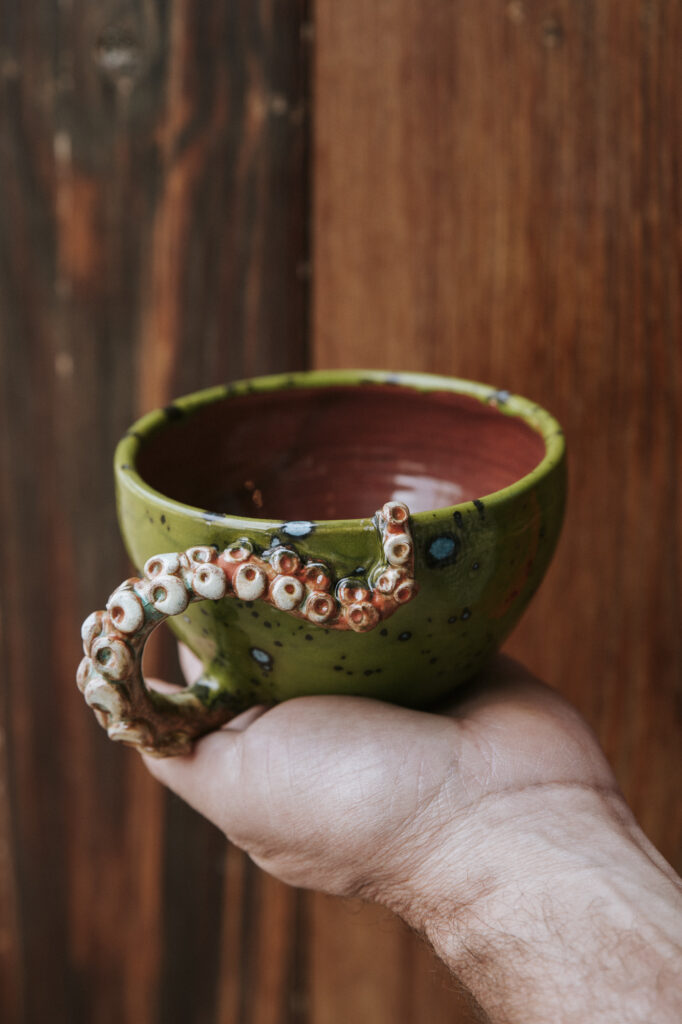
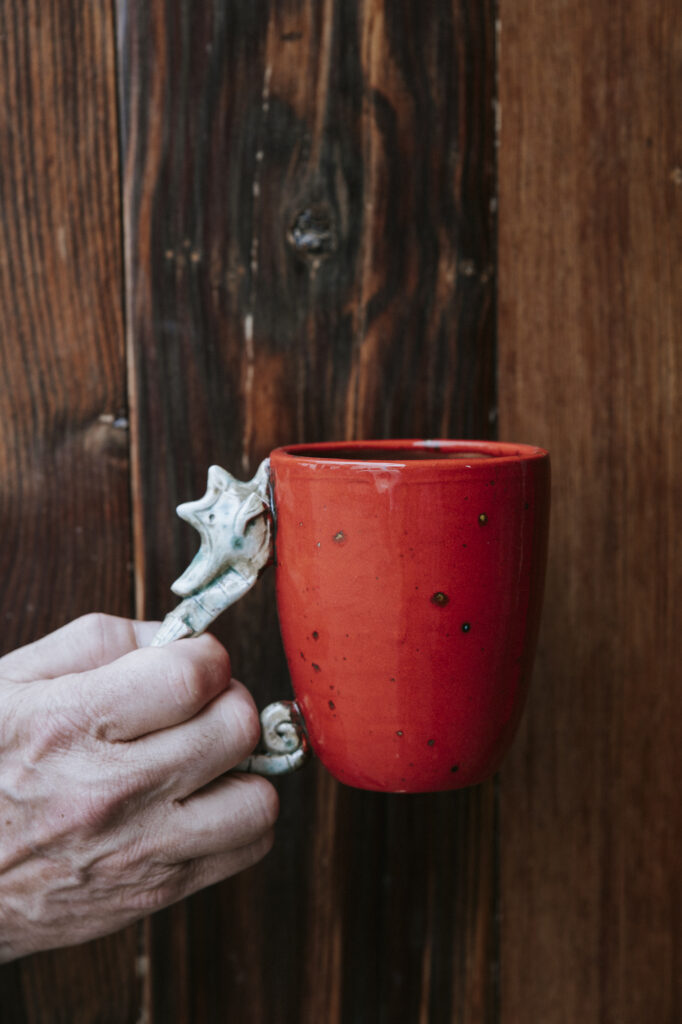
Juan Carlos Vera (Regumbio) is the creator of one of the most original products you will find on our shelves: mugs with handles shaped like an octopus, a whale’s tail and a seahorse. The idea came from a creative ceramics competition: “Candelaria me inspira”. In search of inspiration, Juan Carlos recalled the many times he had gone to the town of Candelaria to eat octopus with his parents as a child — and from that memory came the idea he applied to a lamp and a mug that won him the creative ceramics prize.
Since then, these mugs have become one of his flagship products. Juan Carlos has worked alongside ceramicist Santiago Afonso (Taller Trazgo) for 31 years, sharing a studio in Santa Cruz de Tenerife and producing these fun mugs, among many other creations.
Abrazos de barro: an explosion of colour
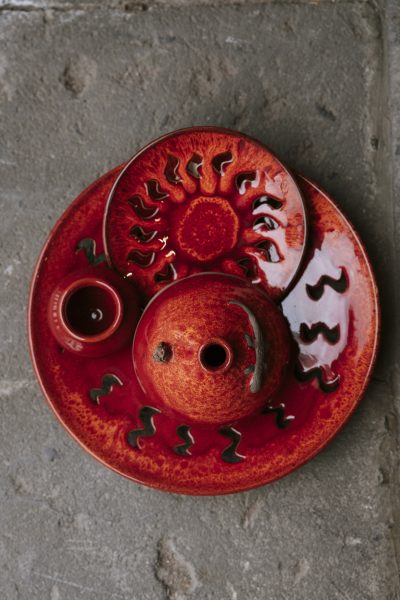
Roberto fell in love with ceramics in the late 1990s and since 2002 has never stopped creating — on the wheel in his La Orotava workshop — both utilitarian and decorative ceramic pieces.
On his walks in the mountains, in contact with nature, and in the animal world he finds his inspiration. Roberto describes his work as creative, avant-garde and modern, and if there is one thing that truly excites him, it is experimenting with colour.
He is a true alchemist who experiments with glazes. You only have to look at his pieces: an explosion of colour.
For Roberto, everything begins with a lump of clay and an idea. After the wheel, the cuts, the slow drying, the sanding and cleaning of the pieces comes the first firing. Then comes the turn of colour — painting with glazes that he fuses once more in the kiln at 1,000 degrees to obtain the piece he envisioned: a piece through which he wants to share his passion for ceramics with whoever buys it.
Artisan jewellery and accessories
Canarian jewellery has evolved greatly in recent decades. From the traditional Canarian hoop earrings — argollas — passed down from generation to generation among the women of a family and still worn at pilgrimages and special festivals, we have moved on to contemporary jewellery that draws on natural forms for inspiration or blends the drawn-thread lacework technique with silver.
Carmen Díaz: lacework jewellery
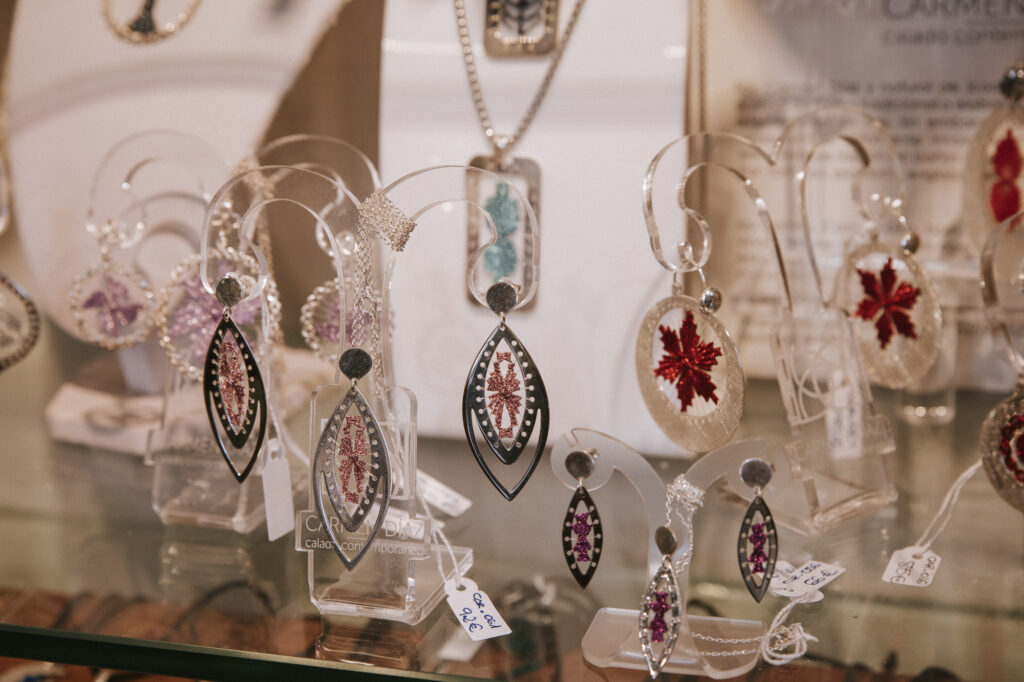
Carmen grew up in Icod de Los Vinos surrounded by lacemakers. Her mother, aunts and grandmothers were all lacemakers who distributed their work throughout the northern region. By the age of five, little Carmen was already doing lacework. Later, with adulthood, came studies, work, family responsibilities, and she drifted away from that world.
In 2010 she decided to turn her professional life around and return to the passion of her childhood: lacework. At that time, the precious drawn-thread tablecloths had become objects of disuse, kept between mothballs in household drawers to prevent them from deteriorating.
She decided she wanted lacework to step out into the street, to be enjoyed every day. A design innovation workshop gave her the key: she had to create designs that fused different craft traditions to produce something that would reach a wider audience and have greater value. From that idea came the first collaboration with a jeweller, and her lacework — made with colourful threads — began to take centre stage in sterling silver earrings, pendants and rings, like the ones we stock in the shop.
Carmen doesn’t follow trends. She falls in love with a thread — for its colour, for its texture — and begins to draw a lacework flower, investigating the support it might rest on: a silver earring, a perspex box, a bookmark featuring a photograph taken by her daughter… Everything is possible for this twenty-first-century lacemaker.
Viviana Bassetti: contemporary jewellery inspired by Canarian nature
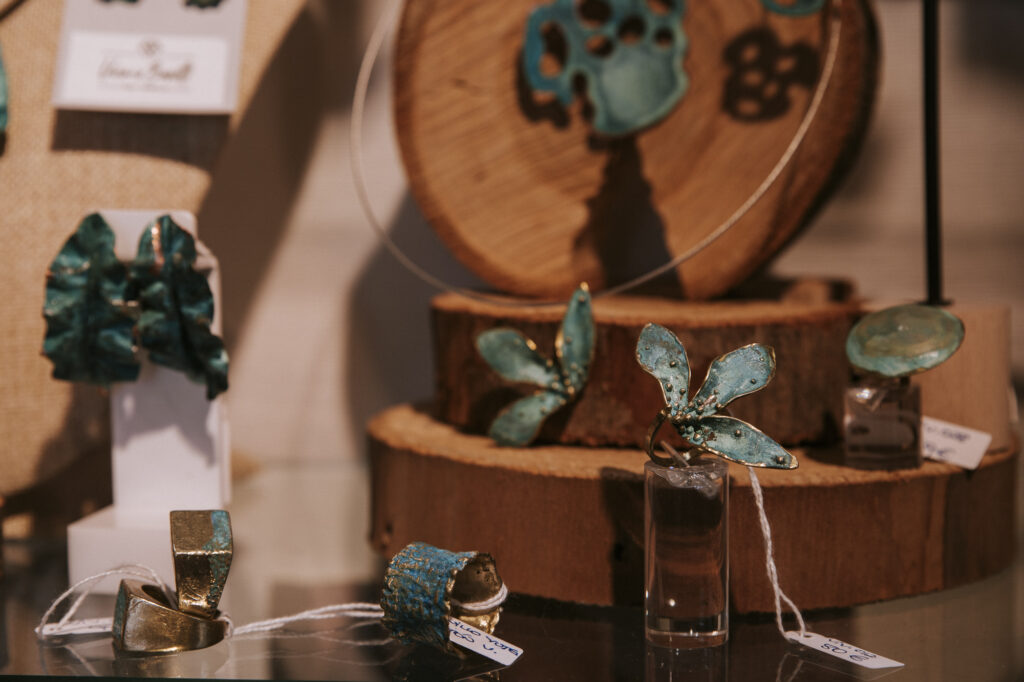
Viviana came to Lanzarote for love in 2010. The island, with its powerful energy, its colours and textures, captured her completely.
Trained in goldsmithing in Rome from a young age, she set up her workshop on the island and in 2020/21 founded her own brand: Viviana Bassetti art jewel.
Her jewellery is contemporary, inspired by the landscape of Lanzarote but with a Mediterranean soul — like her. The natural forms and colours find their way into her pieces. Leaves, shells, flowers… modelled in wax and cast in precious metals — such as gold and silver — as well as other metals like brass, bronze or copper, which she covers with patinas of attractive colours and varnishes to give them a unique finish.
Viviana does not work with gemstones, but she cannot resist pearls, which slip into some of her creations.
Her jewels are small sculptures made with forging, a hammer and heart.
A shop full of treasures
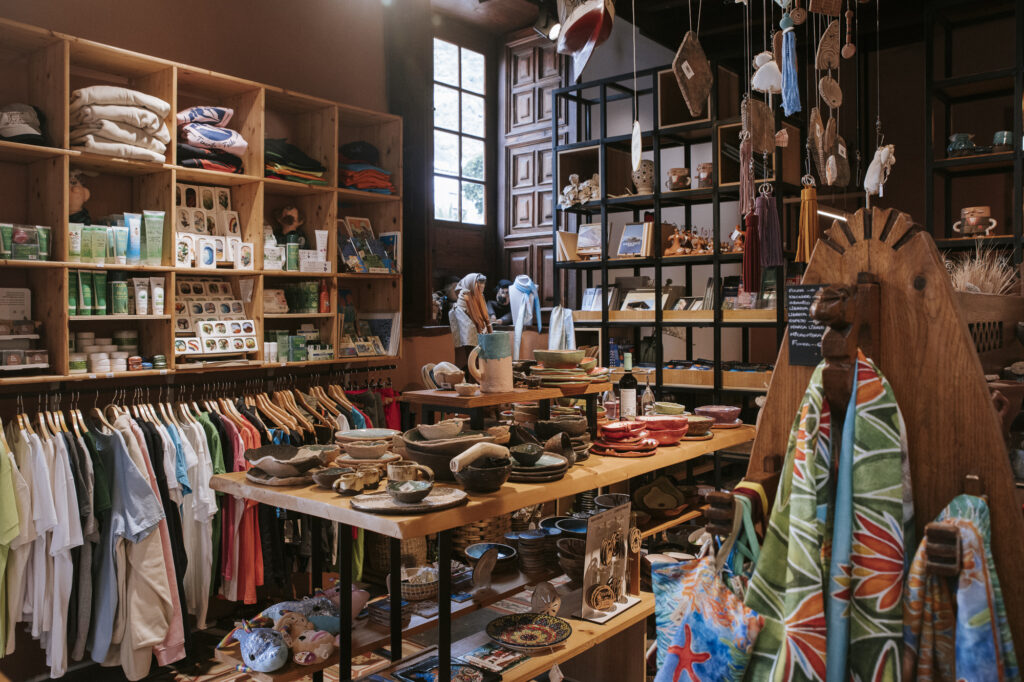
These are just some of the islands’ artisans we work with. On our shelves you will find the perfect gift to take home a little piece of the essence of Tenerife and the Canary Islands. Objects created by hand or designed by people who love our islands and our culture, just as we do.
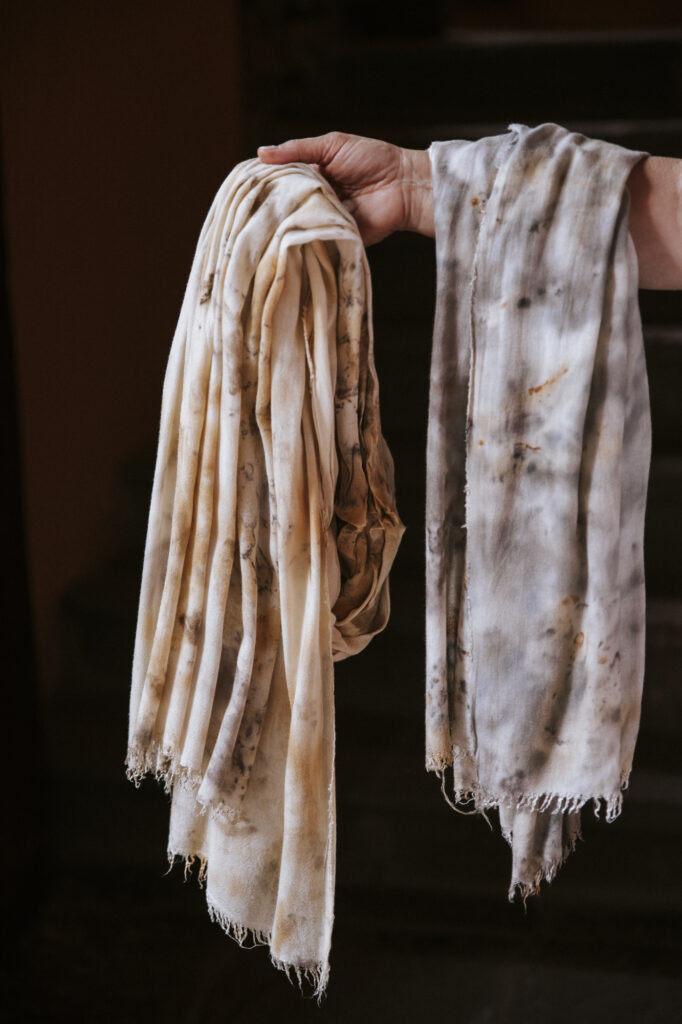
Luisi and Román — who is also an artist who creates garments dyed with natural dyes — are our ambassadors at La Venta de lo de Aquí, and they will be happy to advise you so that you can take home a small treasure with a Canarian soul.
Leave a Reply